Homework Help
Pay for Programming Homework: How to Do It Safely
Learn how to safely pay for programming homework: spot scams, verify tutors, and get explanations, not just code, from vetted experts.
Choose your tutor before you pay.
A Little Support Goes a Long Way
Let’s Figure
It Out.

Your Assignment. Your Choice.
- Set your deadline and budget
- Compare tutor bids
- Chat and share files in your dashboard
Pay for Programming Homework: How to Do It Safely
Your Python assignment is due at midnight, the compiler keeps throwing errors you don't understand, and Reddit threads full of conflicting advice aren't helping. If you're ready to pay for programming homework, you're not alone, but the wrong choice can cost you a grade, your money, or worse, an academic integrity violation.
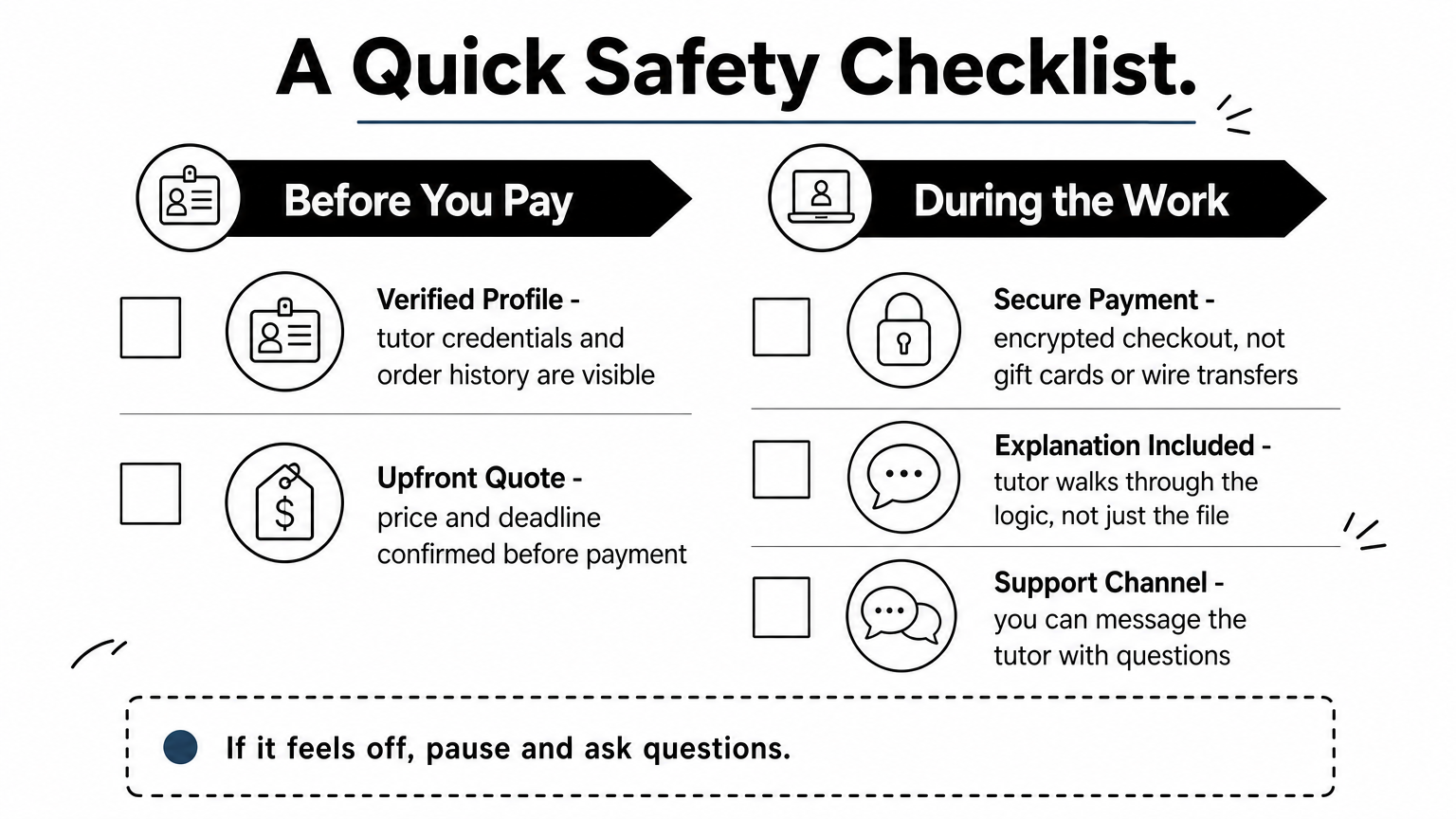
Here's the direct answer: you can safely pay someone to do my coding homework when you vet the service first, checking for verified tutor credentials, transparent pricing shown before you commit, and a process that explains the code rather than just handing you a file to submit blind. Legitimate platforms make this easy to verify. Sketchy freelance sites and anonymous forum posters often don't.
This article walks through what to look for before you pay, red flags that signal a scam or plagiarism risk, and how services like ours structure the process so you get working code and actually understand it. Whether you're stuck on a Java project or debugging Python for the third night in a row, you'll leave knowing exactly how to get help without gambling your coursework.
Why students pay for programming homework help
Programming courses stack up fast. You're juggling data structures in one class, a web development project in another, and maybe a part-time job that eats your evenings. When a Python script won't compile at 11 p.m. and the assignment closes at midnight, paying for coding homework isn't laziness. It's a practical response to a schedule that leaves no room for trial and error.

The gap between lectures and assignments
College courses often assume you can bridge the gap between a 50-minute lecture and a multi-hour coding project on your own. That gap is where most students fall behind. A professor might explain recursion in theory, but debugging a recursive function that throws a stack overflow error is a different skill entirely. Students end up searching for someone to pay to do my programming homework not because they skipped class, but because the course moves faster than the support structure around it.
Common scenarios that push students to pay for help
A few situations come up again and again:
- Tight deadlines: A project is due in 24 hours and you're still stuck on syntax errors from hour one.
- Language switching: You learned Java last semester and now you're expected to write clean Python, with different conventions and libraries.
- Group project gaps: Your teammates disappear, and you're left finishing the code alone the night before submission.
- Concept confusion: You understand the logic but can't translate it into working code that passes the test cases.
- Grade pressure: One more failed assignment tanks your GPA, and you need a working, well-documented solution fast.
Each of these is a legitimate reason students search for someone to pay someone to do my python homework or pay someone to do my java homework, rather than staring at a blank IDE until sunrise.
Paying for help versus paying for a shortcut
Here's where it matters how you use the help. Hiring a tutor to walk through your broken code and explain the fix builds skill. Buying a finished assignment with zero explanation and submitting it as your own does not, and it puts your academic standing at risk if a professor asks you to explain your work in person.
Paying for programming help should teach you something you can use on the next assignment, not just get you through this one.
Students who treat paid help as a tutoring session, one where they ask questions, review the logic, and test the code themselves, walk away better programmers. Students who treat it as a submit-and-forget transaction often get caught when a professor asks a follow-up question they can't answer. The difference isn't the fact that you paid. It's what you did with the help once you got it.
From Stuck to Started
Help in Three Simple Steps
Share Your Assignment
Add your instructions, files, deadline, and budget.
Choose Your Tutor
Compare bids and chat with tutors before choosing.
Work Through It Together
Keep your conversation, updates, and files in one place.
You Don’t Have to Figure It Out Alone